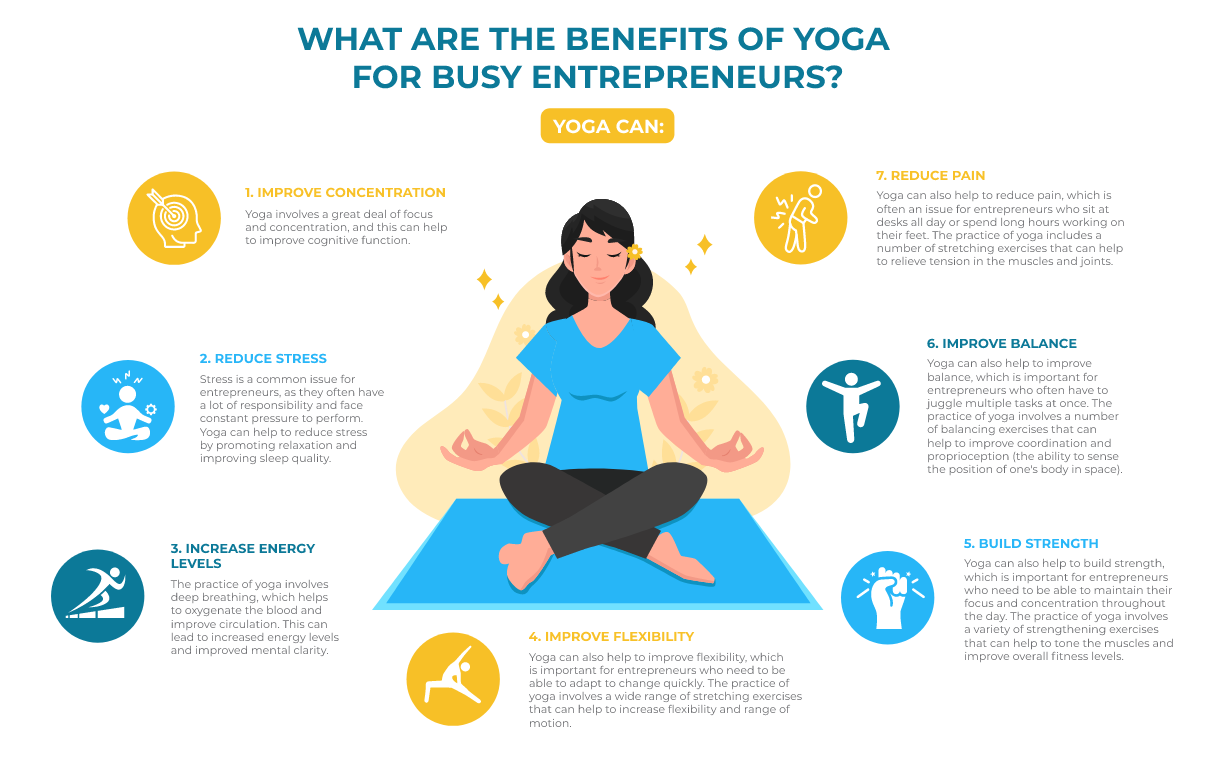
1. IMPROVE CONCENTRATION Yoga involves a great deal of focus and concentration, and this can help to improve cognitive function.
2. REDUCE STRESS Stress is a common issue for entrepreneurs, as they often have a lot of responsibility and face constant pressure to perform. Yoga can help to reduce stress by promoting relaxation and improving sleep quality.
3. INCREASE ENERGY LEVELS The practice of yoga involves deep breathing, which helps to oxygenate the blood and improve circulation. This can lead to increased energy levels and improved mental clarity.
4. IMPROVE FLEXIBILITY Yoga can also help to improve flexibility, which is important for entrepreneurs who need to be able to adapt to change quickly. The practice of yoga involves a wide range of stretching exercises that can help to increase flexibility and range of motion.
5. BUILD STRENGTH Yoga can also help to build strength, which is important for entrepreneurs who need to be able to maintain their focus and concentration throughout the day. The practice of yoga involves a variety of strengthening exercises that can help to tone the muscles and improve overall fitness levels.
6. IMPROVE BALANCE Yoga can also help to improve balance, which is important for entrepreneurs who often have to juggle multiple tasks at once. The practice of yoga involves a number of balancing exercises that can help to improve coordination and proprioception (the ability to sense the position of one’s body in space).
7. REDUCE PAIN Yoga can also help to reduce pain, which is often an issue for entrepreneurs who sit at desks all day or spend long hours working on their feet. The practice of yoga includes a number of stretching exercises that can help to relieve tension in the muscles and joints.
The Top Benefits of Yoga to Entrepreneurs, According to Yogis Around the Nation
Starting a business can be incredibly challenging and intimidating. It is a huge leap of faith, as it requires an individual to take risks with their financial security, invest their time and energy into the venture, and develop skills that they may not have previously possessed. The pressure of making the business successful can become overwhelming, leading to stress-induced exhaustion, physical discomfort, and even burnout. Thankfully, calming activities such as yoga can be extremely beneficial for aspiring entrepreneurs in helping them to cope with these difficulties.
In this roundup, we polled yoga experts across the nation to help us understand what the biggest benefits of yoga are to entrepreneurs by asking each of them a single question:
“What would YOU say are the benefits of yoga to entrepreneurs?”
Create a Calmer Mind to Let Creativity Flow “Yoga can help create a calmer mind from which creativity springs, along with a more balanced system to engage the world with grace.” Katey Branch, Owner, Instructor, Halls Pond Healing Arts
Better Understand Client Needs “What your clients need/want becomes much clearer when you’re experiencing the calmness inherent in the practice of yoga.” Paula Heitzner, Owner, Instructor, Nyack Yoga Center
Yoga Brings Entrepreneurs Energy, Peace and Humor “It’s my experience that yoga is indispensable in the life of an entrepreneur! Yoga practice provides ballast (stability) while navigating the storms and successes of entrepreneurship. It can facilitate abundant energy, peace of mind, and a sense of humor; all valuable traits for souls sailing the seas of successful entrepreneurship. Yoga provides an opportunity for joy and peace throughout the moments of each day. Its practice assists in cultivating a clarity that benefits and enhances the life of entrepreneurs. It’s my experience that yoga is indispensable in the life of an entrepreneur!” Emilia Bohac, Owner, Instructor
Aligning Your Essence “Yoga is attention on balance throughout. Mental, physical/emotional body, & spiritual bodies up to Atman. In focusing, you find you can take certain actions to balance excess & deficiency. Bringing the being into wholeness or Oneness. Aligning the essence of you makes you a bit better at everything. Including entrepreneurship. More practice and more is coming.” Erin Caputo, Owner, Instructor, I AM. Yoga
Yoga Fuels Entrepreneurship! “Yoga is a great practice for entrepreneurs. Yoga is known to help relieve stress, relieve pain, and aid in relaxation and creativity, which is all very important for entrepreneurship. Yoga is not only a physical but a mental and spiritual practice as well – it’s grounding and helps people connect with themselves. This is great for entrepreneurs since they are so busy and deal with a lot of stressors, and it’s great for them to take some time to come back to themselves and reconnect.” Tamara Fayad, Owner, Instructor
Calm the Mind. Invigorate the Spirit. “Yoga helps to calm the mind, stretch the body and invigorate the spirit. Yoga and meditation guides me, informs my decision making, soothes me when things don’t go exactly as planned, and gives me a sense of overall well-being.” Anita Perry, Owner, Instructor
Want to weigh in? We’d love to hear from you, too!
“What would YOU say are the benefits of yoga to entrepreneurs?”
The connection between the body, mind and soul is a topic that has been studied by experts for centuries. Although there is still much to learn, researchers have found that there are certain ways in which these three aspects of our being are connected. In this blog post, we’ll explore some of the ways in which the body, mind and soul are connected and how you can use this knowledge to improve your health and wellbeing.
The Connection Between Body and Soul
The soul is often seen as the intangible part of our being that is not constrained by the physical world. However, research has shown that there is a connection between the body and soul. One way in which they are connected is through the Chakras.
The Chakrasare energy centers located throughout the body. There are seven main Chakras, each of which is associated with a different aspect of our being. When these energies are in balance, we feel healthy both physically and emotionally. However, when one or more of these energies becomes imbalanced, it can lead to physical or emotional problems.
The Connection Between Body and Mind
The connection between the body and mind is also well-documented. The mind-body connection has been studied extensively in the field of Psychology and there is a growing body of evidence to suggest that our thoughts and emotions can have a direct impact on our physical health.
For example, studies have shown that chronic stress can lead to physical problems such as headaches, stomach issues and even heart disease. On the other hand, positive thinking has been shown to boost the immune system, improve cardiovascular health and reduce stress levels.
The Connection Between Mind and Soul
Finally, the connection between the mind and soul is perhaps the most difficult to define. However, many experts believe that our thoughts and emotions are directly connected to our spiritual wellbeing. After all, it is our thoughts and emotions that determine how we react to life’s challenges and whether we see them as opportunities or threats.
When we are able to view life’s challenges in a positive light, we are more likely to find meaning and purpose in them. This can lead to a feeling of inner peace and contentment regardless of what is happening in the external world. On the other hand, if we allow negative emotions like fear, anger and anxiety to control our thoughts, they can prevent us from achieving our full potential both spiritually and emotionally.
The connection between the body, mind and soul is something that has been studied by experts for centuries. Although there is still much to learn about this topic, research has shown that there are certain ways in which these three aspects of our being are connected. By understanding these connections, we can use them to improve our health and wellbeing both physically and emotionally.
The Link Between Food and Mood
You are what you eat—or so the saying goes. And while that may be a bit of an oversimplification, there is some truth to it. The food you consume has a direct impact on your mood and energy levels. Eating healthy foods helps you feel alert and energized, while unhealthy foods can make you feel sluggish and irritable. So, if you want to be successful in business, it’s important to pay attention to what you’re putting into your body.
The Impact of Diet on Mood
There is a growing body of scientific evidence that links diet and mood. For example, one study found that participants who ate a diet high in processed foods and sugar were more likely to experience feelings of depression and anxiety. Another study found that participants who ate a diet high in omega-3 fatty acids were less likely to experience negative emotions like anger, hostility, and irritability.
Of course, diet is just one factor that contributes to overall mental health. Other factors, such as sleep and exercise, also play a role. But the connection between diet and mood is significant enough that it’s worth paying attention to what you eat if you want to be at the top of your game professionally.
Tips for Eating Right
If you’re looking to improve your diet, there are a few simple tips you can follow:
1) Eat plenty of fruits and vegetables. Fruits and vegetables are packed with nutrients that are essential for good health. Aim to eat at least five servings of fruits and vegetables per day.
2) Avoid processed foods. Processed foods are often high in sugar, salt, and unhealthy fats. They can also be low in important nutrients like fiber and protein. To avoid processed foods, try to cook most of your meals from scratch using whole, unprocessed ingredients.
3) Get enough protein. Protein is an important nutrient for maintaining energy levels and preventing feelings of fatigue. Good sources of protein include meat, fish, tofu, legumes, eggs, and dairy products. aim to consume at least 20 grams of protein per day.
4) Stay hydrated. Drinking plenty of water is crucial for good health. Water helps to regulate body temperature, lubricate joints, remove toxins from the body, and carry nutrients to cells. Adults should aim to drink eight glasses of water per day.
5) Limit caffeine intake. Caffeine is a stimulant that can improve mental alertness and physical performance in the short-term but can also lead to jitters, anxiety, and disturbed sleep if consumed in excess. If you do consume caffeine, do so in moderation—no more than 400 milligrams per day (about four cups of coffee).
6) Avoid alcohol consumption. Although moderate alcohol consumption has been linked with some health benefits like reduced risk of heart disease, too much alcohol can have negative effects on mental health including anxiety, depression, insomnia, and memory problems. If you choose to drink alcohol, do so in moderation—no more than two drinks per day for men or one drink per day for women (14 grams of pure alcohol).
7) Get enough sleep. Sleep is critical for good physical and mental health. Most adults need seven or eight hours of sleep per night .If you have trouble sleeping, avoid caffeine after 2 pm and establish a regular sleep schedule by going to bed at the same time each night .
What you eat has a direct impact on your mood ,so it’s important to pay attention to your diet if you want to be successful in business . By eating plenty o f fresh fruits and vegetables ,avoiding processed foods ,and getting enough protein ,you can help improve your mood an\d boost your productivity levels . Additionally ,staying hydrated ,limiting caffeine intake ,avoiding excessive alcohol consumption ,and getting enough sleep will also help improve your mood an\d overall well-being . Paying attention t o what you eat and establishing healthy habits can help ensure that you always perform at your best both physically and mentally.
The Many Benefits of Therapeutic Home Gardening
From the moment we wake up until our head hits the pillow at night, most of us are constantly on the go. We live in a world that is increasingly digital, and as a result, we can often feel disconnected from the natural world around us. This can lead to feelings of stress, anxiety, and even depression. But what if there was a way to combat these negative effects and improve our mental and physical wellbeing? There is, and it’s as simple as getting outside and getting your hands dirty. Gardening has been shown to have therapeutic benefits for people of all ages, and it’s a great way to connect with nature. Let’s take a look at some of the ways in which home gardening can be beneficial.
Relieves Stress: Studies have shown that gardening can help to reduce levels of the stress hormone cortisol in the body. Cortisol is released in response to stressful situations, and can lead to feelings of anxiety and tension. Engaging in therapeutic activities like gardening can help to lower cortisol levels and improve our overall sense of wellbeing.
Boosts Mood: Gardening has also been shown to boost mood and relieve symptoms of anxiety and depression. One study found that patients who participated in horticultural therapy sessions reported lower levels of anxiety and depression after just eight weeks.
Improves Physical Health: Gardening is a great form of exercise, and can help to improve strength, flexibility, and balance. It’s also low-impact, so it’s gentle on the joints for those who may not be able to participate in more strenuous forms of exercise. In addition to the physical benefits, gardening has also been linked with lower blood pressure, cholesterol levels, and heart rate.
Enhances cognitive function: Research has shown that therapeutic activities like gardening can help to improve cognitive function in older adults. One study found that seniors who gardened three times per week had higher scores on tests assessing attention span, memory, language skills, and visuo-spatial ability than those who did not garden.
Sharpens the senses: When we spend time outside in nature, our senses are stimulated by the sounds, smells, and textures around us. This can help to sharpen our perceptions and make us more alert.
Connects us with nature: Perhaps one of the most important benefits of therapeutic gardening is that it helps us to connect with nature. In our fast-paced lives, it’s easy to forget about the natural world around us. By spending time outside tending to our gardens, we can slow down, appreciate the simple things in life, and feel more connected to the world around us.
No matter what your age or ability level, therapeutic gardening is a great way to de-stress, boost your mood, and improve your physical health. It’s also an opportunity to connect with nature and sharpen your senses. So get outside and grow! Your mind—and body—will thank you for it!